
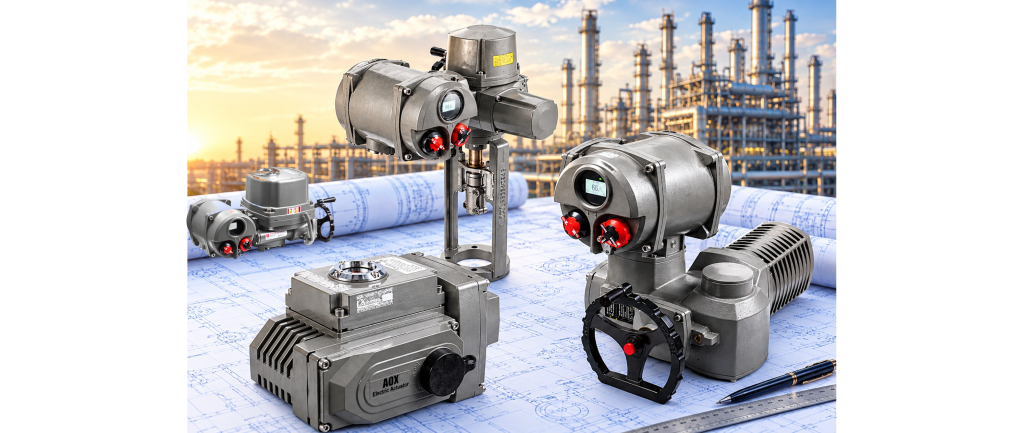
Manual valve automation allows an existing valve to be operated by an actuator instead of a handwheel or lever. A successful retrofit starts with the valve’s condition, operating load, mounting arrangement and control requirements. Buying an actuator before checking those details can turn a straightforward upgrade into a difficult installation.
For water treatment works, mines and industrial plants in South Africa, retrofitting can provide remote operation and clearer valve status. However, the existing valve must first be suitable for the service and for powered operation.
Can your existing manual valve be automated?
Many manual valves can be automated, but the answer depends on their design and condition. A sound valve with an accessible drive connection may be a good candidate. A seized stem, damaged seat or leaking body requires attention before automation is considered.
Check the valve identification and obtain its technical documentation. Confirm the manufacturer permits powered operation and can provide operating torque or thrust data. If the valve cannot be identified or its mechanical limits are unknown, replacing the complete assembly may be the more dependable option.
1. Inspect the valve before selecting an actuator
Start with leakage, corrosion, stem condition and the existing gearbox. Record whether the valve moves smoothly and reaches both end positions.
Heavy manual operation is a reason to investigate. It may indicate deposits, worn components or excessive differential pressure. A larger actuator should not be used to force a defective valve through its travel.
Also check access. The actuator needs room for mounting, cable entry, manual operation and future removal. Take photographs of the valve, drive connection and surrounding pipework.
2. Confirm the load and movement
Ball and butterfly valves usually need quarter-turn motion. Gate and globe valves may require multi-turn or linear arrangements, depending on their drive design.
Use the valve manufacturer’s load requirements for the actual process conditions. Include the worst expected differential pressure and the appropriate application allowance. Valve diameter alone does not establish the operating load.
The actuator, gearbox, bracket, coupling and valve stem must form a compatible drive train. Confirm both available output and the valve’s maximum permitted mechanical loading.
3. Check the mounting interface
A matching bolt pattern is only one part of fitment. Verify drive dimensions, shaft engagement, coupling alignment and bracket strength. For rising stems, check the full stem travel and clearance.
Where a quarter-turn mounting interface follows ISO 5211, confirm the flange designation and drive details against the actual valve drawing. Do not assume that two assemblies with similar-looking flanges are interchangeable.
4. Define how the valve will operate
Write down whether the valve is used for isolation, occasional positioning or frequent modulation. Confirm the power supply, command signal, feedback and local operating requirements.
For water lines, agree the opening and closing time with the process engineer. Faster operation may create pressure transients. Where necessary, review the system hydraulics before choosing a travel time.
Specify behaviour during power loss and control-signal loss separately. A conventional electric actuator may remain in position when power fails. Automatic movement to a safe position requires a specifically engineered arrangement.
5. Plan installation and handover
Agree isolation requirements, shutdown access and the commissioning responsibilities before ordering. Set travel limits and any torque protection according to the valve and actuator instructions.
Test local operation, remote commands, position feedback and the required fault responses. A motor that runs successfully on the bench does not prove that the installed assembly meets the plant’s operating requirements.
Keep the final settings, wiring diagram and test records with the valve tag. These records give maintenance staff a useful starting point when conditions change.
Frequently asked questions
Can an electric actuator be fitted to any manual valve?
No. The valve must be mechanically sound, suitable for powered operation and compatible with the proposed drive arrangement.
Does automation fix a valve that is difficult to turn?
It does not repair the cause. Investigate deposits, damage and operating conditions before specifying powered operation.
Do I need to replace the whole valve?
Not always. Compare the condition, interface, engineering effort and shutdown requirements of a retrofit with those of a complete replacement.
Request a valve automation assessment
Planning manual valve automation? Send KVC Africa the valve datasheet, photographs, operating conditions and control requirements. Our site survey and actuator sizing services help establish a suitable retrofit scope before equipment is ordered.
Discuss your application: sales@kvcafrica.co.za | 016 023 0276.
